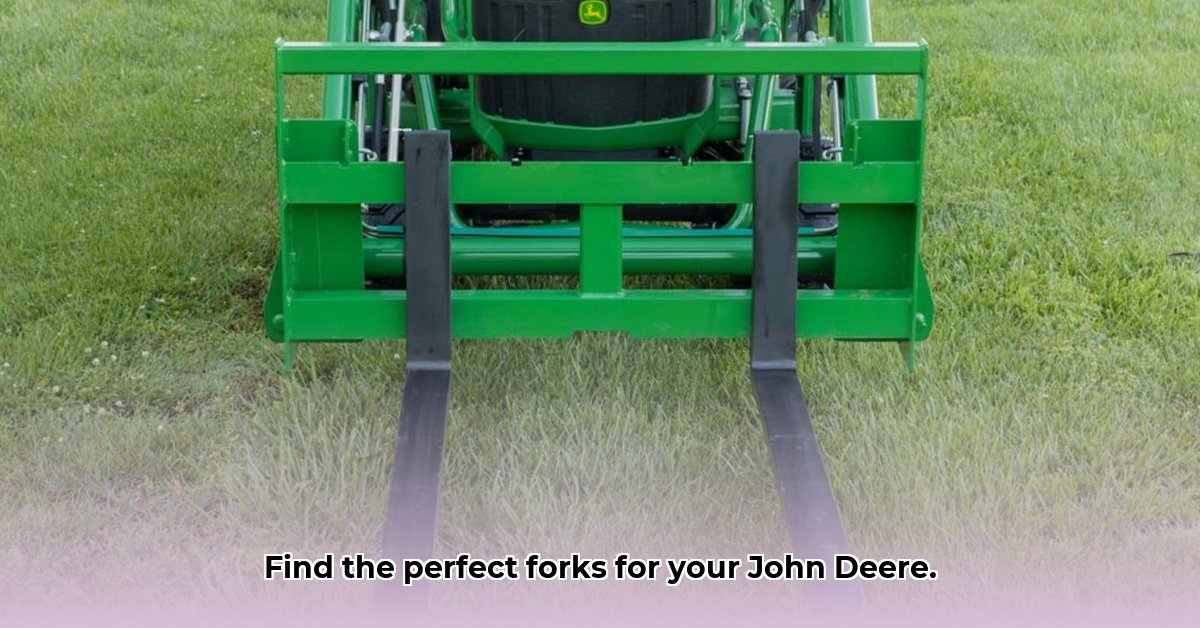
Choosing the right pallet forks for your John Deere tractor is crucial for efficient and profitable farming. This comparative review and instructional guide will help you decide between John Deere's own forks and third-party options, considering load capacity, versatility, cost, and maintenance. For more information on tractor maintenance, check out this helpful resource on tractor fuel pumps.
Understanding Your Needs: Matching Forks to Your Operation
Before comparing specific models, assess your operational needs. What types of materials will you be handling? What are the typical weights of your pallets? Will you be working on uneven terrain? These factors significantly influence your fork choice. For instance, frequently moving massive hay bales demands heavy-duty forks, while smaller pallets of supplies might be handled effectively with a more versatile, lighter-duty option. This preliminary assessment is as important as selecting the right tractor for the job. Are you prioritizing maximum lifting capacity or broader adaptability?
John Deere AP12 Series: Power and Precision
John Deere's AP12 series pallet forks are designed for heavy-duty applications. They boast impressive load capacities, ranging from 3,750 lbs to 10,000 lbs, depending on the specific model. This makes them ideal for farms consistently handling substantial loads. The availability of both fixed and floating tines provides adaptability. Fixed tines are optimal for consistent pallet handling, while floating tines better accommodate uneven terrain. However, this robust design and high load capacity typically come at a higher price point and potentially increased maintenance costs due to more complex components. How often do you manage loads exceeding 4,000 lbs and is the additional cost of the AP12 series justified by this heavy lifting capacity?
Third-Party Forks: Versatility and Value
Numerous manufacturers offer pallet forks compatible with John Deere tractors. These often emphasize versatility over maximum lifting capacity. A typical example, which we will refer to as the "Standard Series," usually lifts around 4,000 lbs. While potentially less powerful than the AP12 series, they frequently offer features like a 2-inch receiver hitch, allowing for the attachment of additional implements such as hay bale spears or stabilizers. This adaptability makes them suitable for diverse tasks, offering flexibility for various farm operations. This increased versatility, however, may result in a compromise on maximum lifting capacity. Given the diverse tasks on many farms, would the added versatility of a Standard Series fork outweigh the enhanced lifting power of the AP12 series?
Comparative Feature Analysis: AP12 Series vs. Standard Series
The table below offers a direct comparison of key features between John Deere's AP12 series and a representative third-party "Standard Series":
| Feature | John Deere AP12 Series | Third-Party ("Standard Series") |
|---|---|---|
| Load Capacity | 3750 lbs - 10,000 lbs | Typically around 4,000 lbs |
| Tine Type | Fixed or Floating | Usually Fixed |
| Versatility | High (within its weight class) | Very High (multiple attachment options) |
| Cost | Generally Higher | Generally Lower |
| Maintenance | Potentially Higher | Potentially Lower |
| Compatibility | Specifically designed for John Deere Loaders | Typically fits multiple loaders (check specifications!) |
Note: Specific prices and maintenance needs vary depending on the model and vendor. Always confirm compatibility with your John Deere loader model before purchase.
Making an Informed Decision: Choosing the Right Pallet Forks
The optimal choice hinges on your budget and operational demands. If maximum lifting capacity is paramount, regardless of versatility, the AP12 series may be justified, especially for farms consistently handling extremely heavy loads. However, if budgetary considerations or the need for diverse attachments are prioritized, a third-party "Standard Series" fork offers a cost-effective and versatile alternative. Remember to always verify compatibility with your specific John Deere tractor and loader model before purchasing.
Key Takeaways:
- John Deere AP12 series forks provide exceptional strength but come with a premium price tag and potentially higher maintenance costs.
- Third-party forks usually offer greater versatility at a more affordable price point, though with generally lower load capacities.
- Thoroughly assessing your farming operation's specific needs – including load weight, frequency of use, and terrain – is essential before making a purchase.
Disclaimer: This guide provides general information. Consult your John Deere dealer or other relevant professionals for specific advice and compatibility verification before making any purchase.